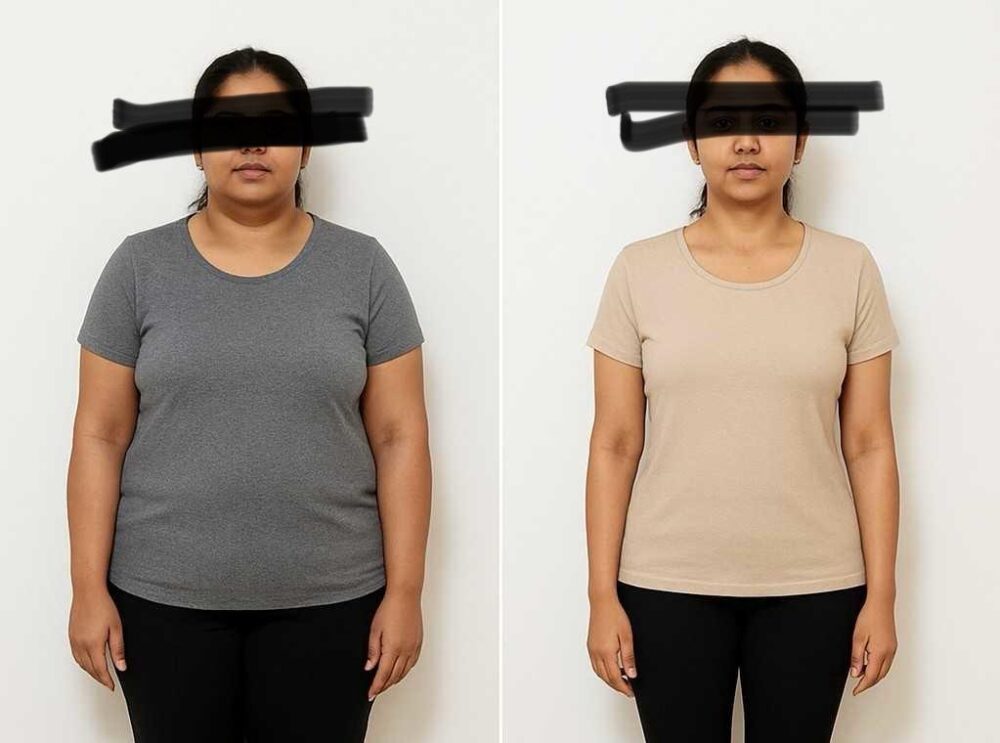
Following Village Voice News’ article on the growing use of Ozempic, an unexpected wave of responses arrived. Among them was one individual who reached out immediately after publication, eager to share her personal experience—and the consequences she never anticipated.
She provided before-and-after photographs and revealed that in just two months, she had lost 25 pounds while using a weight-loss drug. But behind the dramatic transformation was a far more complicated reality—one marked by severe side effects and difficult truths about how widespread and unregulated these medications have become.
“I Was Motivated Because of What I Saw Happening Around Me”
The individual told Village Voice News that she decided to try a weight-loss drug after noticing rapid transformations among people in public life.
She explained:
“When you see public officials or well-known figures shrinking quickly, people talk. Everyone says, ‘That can’t be surgery; the recovery is too long.’ So the assumption becomes medication. And that makes everyday people, like me, feel tempted to try it too.”
She emphasised that these assumptions were based on public perception, not confirmed medical information. But the influence, she said, is real and widespread.
A Doctor’s Warning: “Rapid Weight Loss Is Rarely Explained by Exercise Alone”
A local doctor, speaking on condition of anonymity, told Village Voice News that drastic weight changes—whether in the public eye or not—should always prompt caution.
“When someone loses weight rapidly, it can be due to medication, surgery, an underlying health condition, or a combination of factors. People must not assume, and certainly must not self-medicate to copy what they think is happening.”
He stressed that drugs like Ozempic are potent medications, never meant to be used casually or without medical supervision.
Her Experience: Dramatic Weight Loss at a Devastating Cost
The woman who contacted this newspaper said her rapid weight loss came with intense physical suffering.
“My photos look beautiful. My body changed fast. But the side effects were unbearable. I had more harm than benefit.”
She described:
1. Severe nausea and frequent vomiting
“To the point where I couldn’t leave home some days.”
2. Sharp abdominal pain
“Like my stomach was shutting down.”
3. Exhaustion and weakness
“I was too tired to function normally.”
4. Loss of appetite that bordered on starvation
“It wasn’t dieting. It was barely eating.”
Despite the 25-lb weight loss, she said she regrets ever starting the drug.
“More People Are Using These Drugs Than Anyone Realises”
She told Village Voice News that the use of Ozempic and similar medications is far more widespread than is publicly acknowledged.
“It’s not just celebrities. Teachers, nurses, people in government offices, people in banks—so many are using it quietly.”
She described a mix of legitimate prescriptions, online sources, and informal sharing networks—many without any medical oversight.
Why These Drugs Are So Tempting
-
Fast, visible results
-
Strong appetite suppression
-
Social pressure to maintain appearances
-
Public speculation about high-profile transformations
The appeal is understandable—but so are the risks.
The Serious Downsides Many Users Hide
Doctors warn that Ozempic-like medications can cause:
-
Severe gastrointestinal problems
-
Persistent nausea
-
Gastric slowing or gastroparesis
-
Dehydration and nutrient loss
-
Mood changes
-
Rapid weight regain after stopping
These risks increase dramatically when users obtain the drug without proper medical supervision.
Safer Alternatives Exist—But They Still Require Professional Guidance
Other GLP-1 medications:
-
Wegovy (semaglutide)
-
Saxenda (liraglutide)
Other prescription weight-loss drugs:
-
Contrave
-
Qsymia
-
Orlistat
Newer options:
-
Tirzepatide (Mounjaro/Zepbound)
All carry potential side effects and require monitoring.
More Voices Are Emerging—And They Need to Be Heard
The individual who contacted Village Voice News after our initial article said she did so because:
“People only see the pictures. They don’t see what the drug does to you. I wanted others to know the truth before they make the same mistake.”
Her account reflects a larger pattern—one that deserves transparency, medical oversight, and open conversation as the use of weight-loss medications continues to spread quietly and rapidly.