Concerns among Guyanese are growing over the increasing presence and unknown number of Venezuelans living in the country following the October 26, 2025 bomb attack on a Mobil Gas Station in Georgetown. The attack, carried out by Venezuelan national Alexander Ramirez Peodomo, has been classified by the Guyana Police Force as a terrorist act. The incident has reignited national fears about security, migration and Guyana’s ongoing territorial controversy with Venezuela, which continues to falsely claim the Essequibo region.
In response, the People’s Progressive Party/Civic (PPP/C) government announced plans to fast-track the rollout of the Electronic Identification (EID) card system for both nationals and foreigners. The government says the initiative will help identify all residents, setting a compliance deadline after which non-compliant persons may face sanctions. However, critics say the policy may be too little, too late. They argue that for years, the authorities ignored repeated warnings to strengthen migration management systems and even dismantled infrastructure established under the former A Partnership for National Unity and Alliance for Change (APNU+AFC) coalition government (2015-2020).
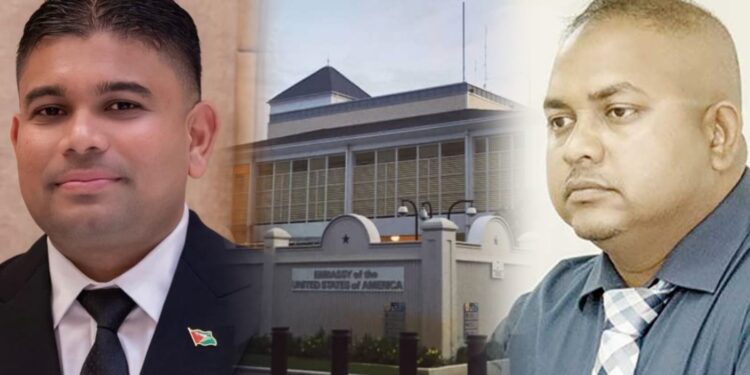
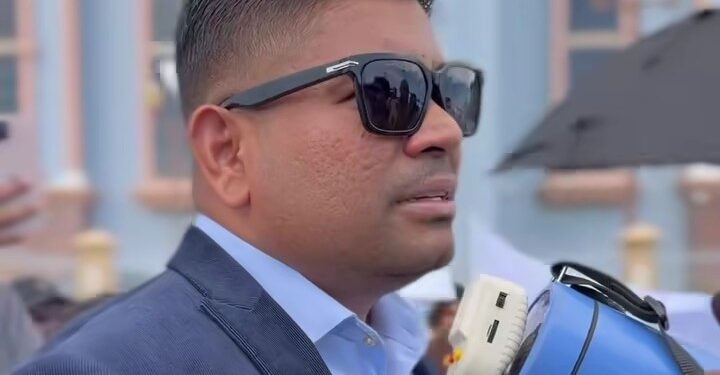
One of the most vocal figures on this issue has been Retired Rear Admiral Dr Gary Best, former Chief-of-Staff of the Guyana Defence Force (GDF). For years, Best has warned of the dangers posed by the unchecked influx and settlement of Venezuelans, particularly in border regions. In September 2023, he cautioned that Guyana’s immigration policies risked creating “conditions that allow Venezuela to threaten a referendum in any part of Essequibo”
“We must avoid a Crimea-type situation occurring in our dear land of Guyana,” Best said at the time, invoking Russia’s annexation of Crimea as a warning about how population movements can be weaponised for territorial control.
Best’s concerns, once viewed as overly alarmist, have gained new traction following the Georgetown bombing. He has long argued that the large-scale settlement of Venezuelans in western Guyana could create demographic vulnerabilities that might later be exploited by Caracas to justify its territorial ambitions.
In a November 2023 opinion piece (Demerara Waves), Best called for a moratorium on citizenship and voting rights for Venezuelan migrants until comprehensive security vetting was completed.
He proposed categorising migrants into four groups: those with genuine Guyanese ties, legitimate refugees, economic migrants and those subject to deportation. “The Government of Guyana needs no further evidence of this clear and present danger to Guyana’s national patrimony,” he wrote.
Best also pressed for an immediate cap on migrant inflows, contending that uncontrolled entry “presents both demographic and security challenges that can no longer be ignored”
He likened the situation to “allowing a soft invasion to unfold through humanitarian inaction.”
Official data show that roughly 2,400 Venezuelans entered Guyana monthly between 2024 and 2025, many settling in Regions One and Seven, which fall within the territory Venezuela claims
The government has insisted that all entrants are being “carefully vetted” and that border communities remain under control , a claim many do not believe. However, the October 2025 attack has prompted a rethink of those assurances. Security experts argue that gaps in migration oversight, weak border patrols and inconsistent record-keeping have created an environment in which criminal or extremist elements could operate undetected.
Political observers note that Best’s earlier warnings about demographic vulnerability and national security now appear prescient. His long-standing argument that migration must be viewed through a strategic and defence-oriented lens is increasingly echoed in public debate.
Yet human-rights advocates caution against conflating refugees with terrorists, warning that collective suspicion could lead to discrimination. They urge the government to balance national security with compassion and international humanitarian obligations.
Best insists that Guyana can no longer afford to treat migration as a purely social issue. “This is not merely about humanitarian relief,” he wrote. “It is about protecting Guyana’s territorial integrity and ensuring that no external power can use demography as a weapon”
The PPP/C government now faces mounting criticism for ignoring repeated warnings and dismantling the systems that could have prevented the current crisis. Many accuse the administration of being more driven by self-serving political interests than by the nation’s security needs. Political analysts argue that the government’s reluctance to act earlier may have stemmed from its willingness to use Venezuelan migrants to secure votes, turning a national security risk into a political opportunity.
Guyana’s challenge today is not only to secure its borders but to rebuild public trust in leadership that has for too long prioritised politics over protection. The new EID system may help restore some order, but for many, the damage has already been done.