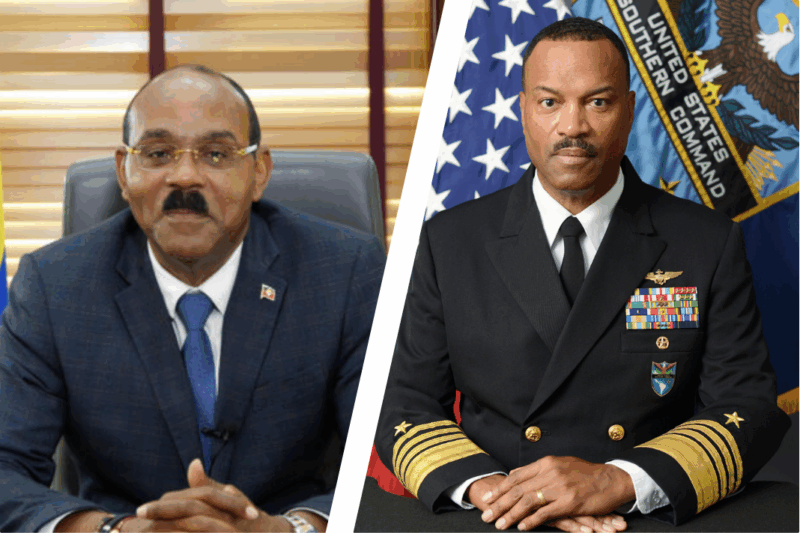
Admiral Alvin Holsey, Commander of U.S. Southern Command (SOUTHCOM), wrapped up a two-day visit to Antigua and Barbuda and Grenada this week, focused on bolstering regional security cooperation and confronting shared threats such as transnational crime and illicit trafficking.
The visit—Holsey’s first to the two Eastern Caribbean nations since assuming command in November 2024—comes as the United States increases maritime patrols in the region, particularly in response to allegations of drug shipments moving from Venezuela through Caribbean waters. The U.S. has been intensifying surveillance and interdiction efforts in coordination with partner nations, citing a surge in narcotics trafficking across maritime routes.
In Antigua, Admiral Holsey met with Prime Minister Gaston Browne and senior Cabinet officials in a closed-door session described as a “courtesy call.” Discussions reportedly centered on regional security challenges, border defense, and ongoing collaboration between U.S. and Caribbean security forces.
Speaking after the meeting, Prime Minister Browne firmly reiterated his country’s stance on neutrality and peace in the region.
“The Caribbean must remain a Zone of Peace — that is non-negotiable,” Browne declared. “Antigua and Barbuda has no appetite for geopolitical spats. We are too small a nation to be drawing battle lines or creating enemies.”
Admiral Holsey also held talks with Antigua and Barbuda’s Chief of Defence Staff, Brigadier Telbert Benjamin, to discuss operational coordination in maritime security and information sharing.
In Grenada, the SOUTHCOM chief met with Prime Minister Dickon Mitchell and Acting Commissioner of Police Randy Connaught of the Royal Grenada Police Force. Their discussions highlighted concerns over narcotics trafficking, illegal migration, and the need for increased joint efforts to secure national borders and coastal waters.
“These visits are about listening, learning, and deepening the ties that help all of us address common threats,” Admiral Holsey said. “We share a vested interest in the safety and sovereignty of this region.”
While the U.S. maintains that its maritime operations are aimed at disrupting criminal networks, some Caribbean leaders have voiced caution about increased militarization in regional waters. Browne’s remarks signal a careful balancing act — maintaining close cooperation with Washington while protecting the Caribbean’s longstanding commitment to peaceful coexistence.
The visit underscores SOUTHCOM’s ongoing strategy of strengthening alliances with Caribbean nations as part of broader efforts to counter transnational threats in the Western Hemisphere.