MONTEGO BAY – Four CARICOM nations will implement full free movement of people on October 1, 2025, marking the first time in the Caribbean Community’s 52-year history that unrestricted movement between member states becomes reality.

Barbados, Belize, Dominica, and St. Vincent and the Grenadines are pioneering this breakthrough using innovative Enhanced Cooperation protocols, potentially catalyzing broader regional integration after decades of incremental progress.
This historic implementation grants all nationals comprehensive rights to live, work, and access social services across the four countries without permits or restrictions, moving far beyond current limited arrangements that cover only skilled workers in specific categories.
The significance extends beyond economics to symbolize Caribbean unity overcoming the sovereignty-integration tension that has constrained regional cooperation since independence.
As populations decline across the region and global challenges intensify, these four nations are demonstrating that meaningful integration remains achievable when political will meets practical readiness.
CARICOM’s unfulfilled founding vision finally advances
CARICOM emerged from the ashes of the failed West Indies Federation (1958-1962) and the limited Caribbean Free Trade Area (CARIFTA).
When Caribbean leaders signed the Treaty of Chaguaramas on July 4, 1973, they envisioned comprehensive integration including free movement of people alongside goods, services, and capital.
Prime Ministers Errol Barrow of Barbados, Forbes Burnham of Guyana, Michael Manley of Jamaica, and Eric Williams of Trinidad and Tobago established CARICOM with three pillars: economic integration, foreign policy coordination, and functional cooperation.
However, the free movement component remained largely theoretical for decades. The 2001 Revised Treaty of Chaguaramas established the CARICOM Single Market and Economy (CSME) framework, finally implementing limited free movement in 2006.
Yet this system restricted movement to just 12 skilled categories – university graduates, artists, musicians, nurses, teachers, and others – requiring complex Skills Certificates and lengthy verification processes.
Previous initiatives faced persistent obstacles: sovereignty concerns, economic disparities between member states, limited institutional capacity, and what scholars termed the “CARICOM challenge” of integrating diverse areas while preserving national identities.
Countries repeatedly missed implementation deadlines – the CSME was originally scheduled for 2008, extended to 2015, then put on indefinite hold for re-evaluation.

Enhanced cooperation unlocks integration breakthrough
The Protocol on Enhanced Cooperation, signed in 2023, provides the legal framework enabling October’s breakthrough. This mechanism allows groups of at least three member states to advance integration where community-wide consensus proves elusive, requiring only two-thirds majority approval from CARICOM’s Conference of Heads of Government.
The Enhanced Cooperation Chapter represents sophisticated institutional innovation, maintaining overall CARICOM coherence while enabling “multi-speed integration.” It creates binding obligations for participating states while leaving doors open for others to join when ready.
This addresses the historical pattern where unanimous consent requirements prevented progress, allowing committed countries to pioneer deeper cooperation without waiting for laggards.
CSME Lead Head of Government Mia Mottley of Barbados emphasized this responds to “what every Caribbean citizen has wanted since we’ve had control of our destiny,” while acknowledging that “we don’t have enough people to continue to uplift the rest of us” – addressing regional population decline through enhanced labor mobility.
Full free movement transforms limited arrangements
The October implementation fundamentally transforms Caribbean movement rights. Current CSME arrangements require Skills Certificates, employment verification, and category restrictions. Processing takes 5-6 weeks minimum, and movement remains employment-focused with limited family rights.
Full free movement eliminates these barriers entirely. Citizens of the four countries gain comprehensive rights to “enter, leave, re-enter, move freely, reside, work and remain indefinitely” without permits or time restrictions.
Enhanced contingent rights include access to emergency and primary healthcare, public primary and secondary education for children, and simplified business establishment procedures.
This represents a quantum leap from skills-based movement to universal movement rights for all nationals regardless of occupation or skill level – precisely what CARICOM’s founders envisioned but couldn’t implement.
Four founding members lead integration renaissance
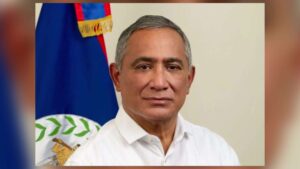
These four countries bring unique advantages as integration pioneers. Barbados was among CARICOM’s original founding members in 1973 and led CSME implementation in 2006. Belize, Dominica, and St. Vincent joined in 1974 as second-wave members, demonstrating long commitment to regional cooperation.
Their leaders possess extensive integration experience: Roosevelt Skerrit of Dominica served as CARICOM Chairman during the Enhanced Cooperation Protocol development, while Ralph Gonsalves of St. Vincent is CARICOM’s longest-serving leader. All four countries demonstrated legislative and administrative readiness when other nations faced internal constraints.
Strategically, they represent diverse Caribbean geography and economics – from Barbados’s developed economy to Belize’s Central American location – providing a comprehensive test case for broader implementation.
Regional integration challenges meet pioneering solution
Caribbean integration has historically struggled with economic asymmetries, sovereignty concerns, and implementation deficits. CARICOM’s share of global trade declined from 3% in the 1970s to 0.25% by 2012, while intra-regional trade never exceeded 21.5% of total trade.
The October 2025 implementation offers hope for overcoming these challenges through practical demonstration rather than endless negotiation. As IOM Caribbean Coordinator Patrice Quesada noted, this “truly historical decision” represents a “bold step towards regional integration” that could accelerate sustainable development regionwide.
Success of this four-country pilot could catalyze broader CARICOM participation, while failure would inform necessary adjustments. Either way, these pioneering nations are advancing Caribbean unity beyond decades of incremental progress, potentially fulfilling the integration vision CARICOM’s founders established over half a century ago. WiredJA