The United States Department of State has formally urged the government of Antigua and Barbuda to implement stronger safeguards for Cuban workers employed in the twin-island nation.
In a recent communication, U.S. officials outlined a series of recommended best practices aimed at preventing forced labor and ensuring that Cuban professionals working abroad are treated fairly. The recommendations include requiring binding tripartite contracts signed by the employer, the worker, and the Cuban government to guarantee transparency in employment arrangements.
The State Department also encouraged Antigua and Barbuda to maintain a registry of Cuban workers, conduct unannounced labor inspections, and verify that workers retain control of their passports and professional credentials.
Additional guidance emphasized that salaries should be paid directly to accounts controlled by the workers themselves and that they must enjoy the same labor protections as nationals of the host country.
Other recommendations include allowing Cuban workers the freedom to move independently, socialize freely, and live outside of shared housing arrangements that could enable surveillance.
The U.S. also urged Antigua and Barbuda to protect workers who end their contracts and may fear punishment if they return to Cuba, while calling on Cuban authorities to end the practice of labeling such individuals as “deserters.”
Washington’s appeal reflects longstanding concerns over allegations of coercion within Cuban overseas labor programs, particularly in the health and education sectors.
The State Department has stressed the importance of protecting the human rights of these workers and holding accountable any officials or actors Cuban or otherwise who facilitate or benefit from forced labor practices.
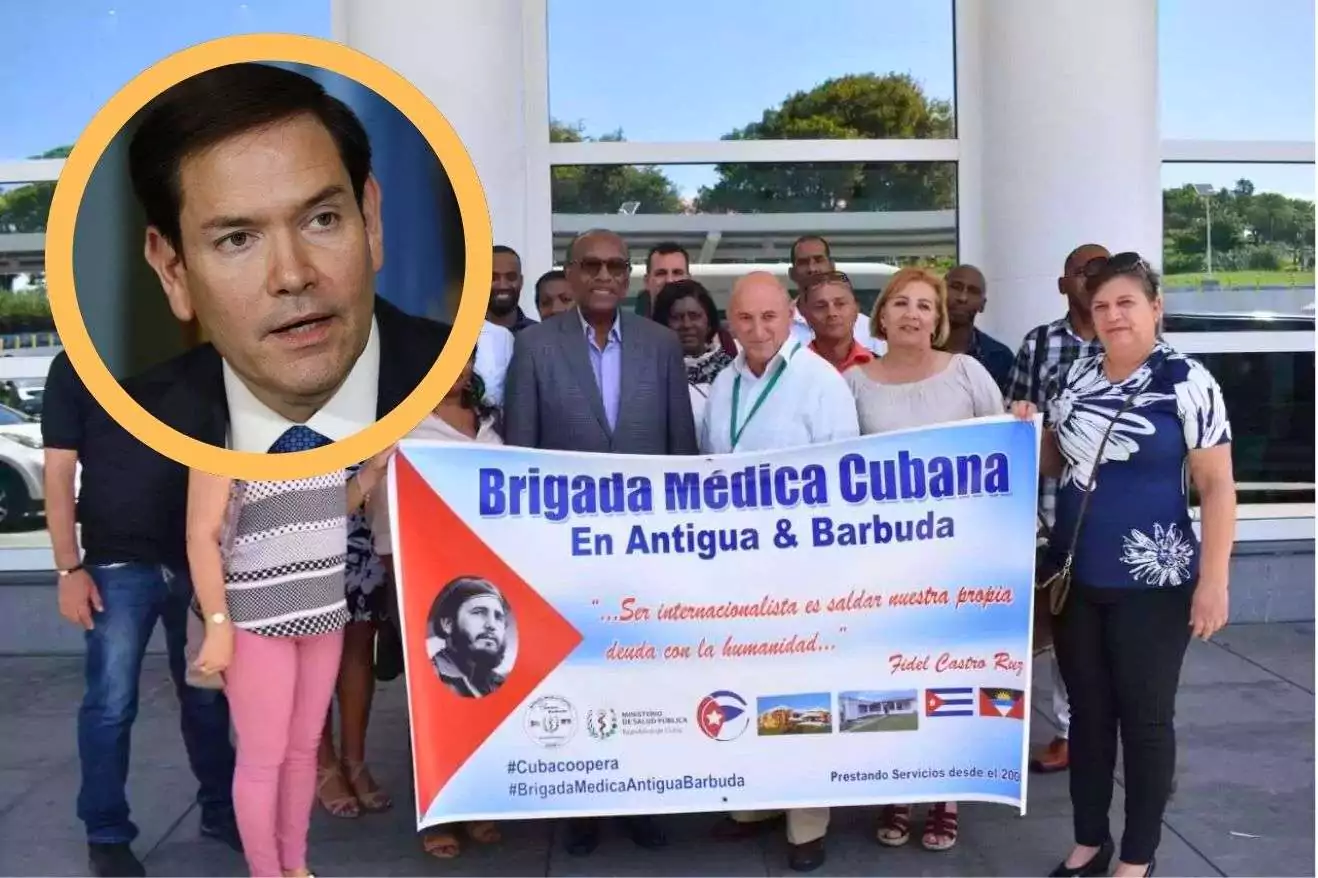
Antiguan authorities have not yet issued a formal response to the recommendations but Prime Minister Gaston Browne strongly defended the Cuban Medical Brigade program, which employs medical professionals from Cuba in the healthcare systems of Antigua and Barbuda.
Earlier this year, during a meeting where leaders from five OECS states and the Bahamas spoke with US Secretary of State Marco Rubio, PM Browne aimed to dispel any misconceptions linking this initiative to human trafficking.
Accompanied by Antigua and Barbuda’s Ambassador to the United States, Sir Ron Sanders, PM Browne emphasized that the relationship with the Cuban medical personnel is not exploitative.
He clarified that the government compensates the Cuban doctors and nurses fairly, treats them well, and imposes no restrictions on them, stating that their engagement is no different from arrangements made for medical services with professionals from countries like Ghana or the Philippines. Antigua New