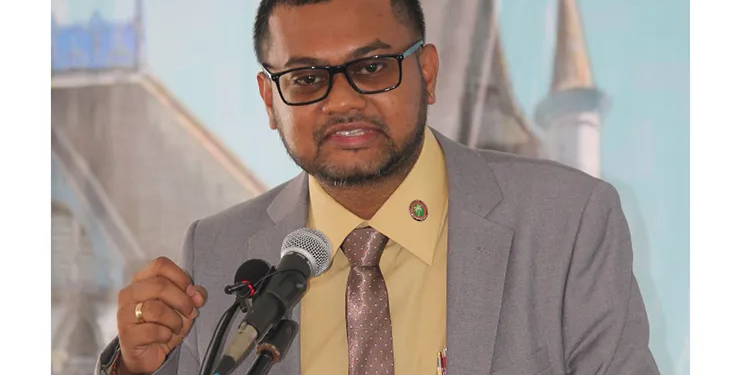
GEORGETOWN, Guyana – A recent and yet another controversial statement by the Minister of Education, Hon. Priya Manickchand, has sent shockwaves through Guyana’s political landscape, drawing accusations of hypocrisy and a deliberate attempt to undermine the opposition ahead of the September 1, 2025 General and Regional Elections. Critics argue that her remarks, labeling the Forward Movement party as “idiotic and sexist,” not only set back the cause of women in Guyana by nearly a century but also serve as a desperate distraction from the glaring failures within the education sector under her tenure.
At the heart of the controversy is the Minister’s assertion that the Forward Movement party, led by Amanza Walton-Desir, is sexist due to 67% of its candidates being women. This argument has been widely decried as illogical and contradictory, especially given the historical status quo where political parties often feature a male-dominated candidate list without facing similar accusations of sexism from the current administration.
A scathing response circulating among political observers highlights the profound disappointment and frustration with the Minister’s approach;
Priya Manickchand’s performative feminism rings hollow while her own legacy as Education Minister is defined by systemic failure. Instead of lecturing others on sexism, perhaps she should explain:
– Why 57% of Guyana’s workforce lacks a high school diploma under her watch—a damning indictment of her policies.
– Why parents had to beg for transparency after NGSA score discrepancies raised suspicions of political manipulation.
– Why her own ministry has left generations of children backward in literacy and numeracy.
Amanza’s party isn’t the problem here, it’s the minister’s flippant stipidity. It is no wonder that she was left off of the podium and indeed the stage at the PPP rally. Manickchand is a failure. The PPP know it and the people of Guyana know it. Manickchand speaks of mediocrity but the real “mediocrity” is a minister who weaponizes identity politics to distract from her abysmal record. Guyana’s children deserve better than hashtags and hypocrisy.
The critique points to the alarming statistic of 57% of students failing to matriculate, a figure that paints a grim picture of the education system’s effectiveness and the Minister’s stewardship. This persistent high failure rate at a crucial juncture in students’ academic lives directly impacts the nation’s future workforce and economic development.
Beyond the matriculation rates, the response also brings to light past controversies, such as the alleged “NGSA score discrepancies,” which fueled public distrust and demanded greater transparency from the Ministry of Education. Such incidents, combined with the current low performance indicators, suggest a deep-seated crisis within the education system that critics argue is being overshadowed by political theatrics.
The accusation that the Minister is employing “divisive tactics” and “weaponizing identity politics” to divert attention from her “abysmal record” resonates with many who believe that the focus should be on tangible educational reforms rather than on politically charged rhetoric. As the 2025 elections draw closer, the public will undoubtedly scrutinize the performance of all parties and ministers, with education remaining a critical concern for the future of Guyana.