Tuesday, September 15, 2026
Village Voice News
[adning id="37476"]
ADVERTISEMENT
  • Home
  • News
  • Sports
  • Editorial
  • Letters
  • Global
  • Columns
    • Eye On Guyana
    • Hindsight
    • Lincoln Lewis Speaks
    • Future Notes
    • Blackout
    • From The Desk of Roysdale Forde SC
    • Diplomatic Speak
    • Mark’s Take
    • In the village
    • Mind Your Business
    • Bad & Bold
    • The Voice of Labour
    • The Herbal Section
    • Politics 101 with Dr. David Hinds
    • Talking Dollars & Making Sense
    • Book Review 
  • Education & Technology
  • E-Paper
  • Contact Us
No Result
View All Result
  • Home
  • News
  • Sports
  • Editorial
  • Letters
  • Global
  • Columns
    • Eye On Guyana
    • Hindsight
    • Lincoln Lewis Speaks
    • Future Notes
    • Blackout
    • From The Desk of Roysdale Forde SC
    • Diplomatic Speak
    • Mark’s Take
    • In the village
    • Mind Your Business
    • Bad & Bold
    • The Voice of Labour
    • The Herbal Section
    • Politics 101 with Dr. David Hinds
    • Talking Dollars & Making Sense
    • Book Review 
  • Education & Technology
  • E-Paper
  • Contact Us
No Result
View All Result
Village Voice News
No Result
View All Result
Home News

A huge human drama: how the Demerara Rebellion that began on Gladstone Plantation led to Emancipation

The Demerara Rebellion failed, but it was a step towards ending slavery in the British empire

Admin by Admin
August 1, 2024
in News
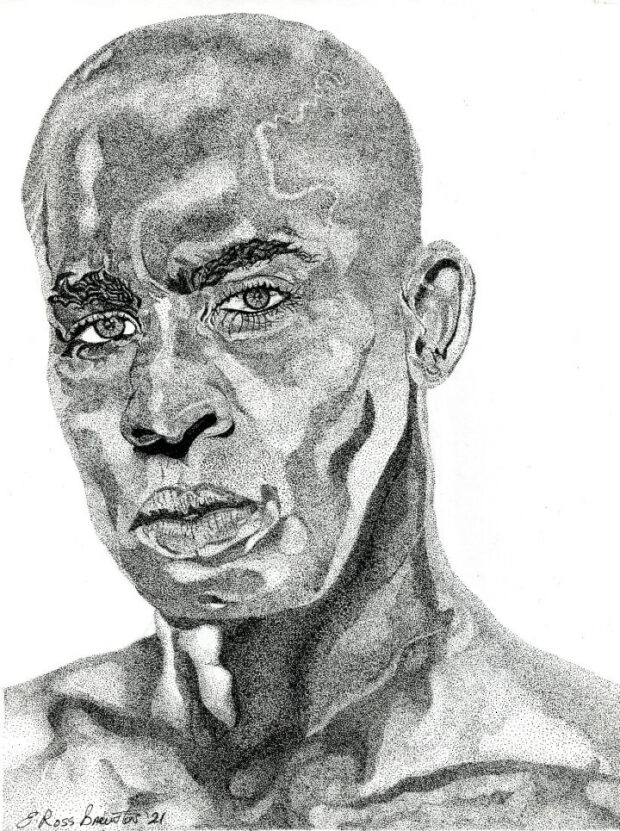
Image credit: Jack Gladstone, imagined by Errol Ross Brewster

Image credit: Jack Gladstone, imagined by Errol Ross Brewster

0
SHARES
0
VIEWS
Share on FacebookShare on Twitter

By Jonathan Smith and Paul Lashmar- The Demerara Rebellion of August 1823 was a pivotal event in the abolition of slavery in the British Empire.

While the transatlantic slave trade, the largest forced migration in human history, was outlawed by Britain in 1807, slavery continued across the colonies. Conditions were brutal in Demerara, one of three provinces that made up British Guiana, where sugar plantations were among the most profitable in the world.

READ ALSO

The Hidden Exchange Rate Costing Guyanese Businesses 7% They Can’t See in the Budget

Guyana’s 33.3% Growth Meets a Cost-of-Living Crisis

Nigel Westmaas, professor in Africana Studies at Hamilton College, New York, said: “In Demerara the sugar regime was extremely harsh. The cutting of the crop required huge numbers of labourers, who would wake at dawn or even earlier and carry out backbreaking work in the sun with a whip on their back.”

They worked barefoot and endured terrible conditions, he said. “There was terrible pain, suffering and isolation, families were split up and sold. It was horrendous.”

Rape, violence and brandings were daily occurrences. African culture was suppressed, life expectancy short.

The rebellion began on John Gladstone’s plantation Success, with the peaceful goal of securing better working conditions. Led by enslaved African Jack Gladstone, it quickly spread across the province and eventually about 13,000 Africans rose up on 60 plantations.
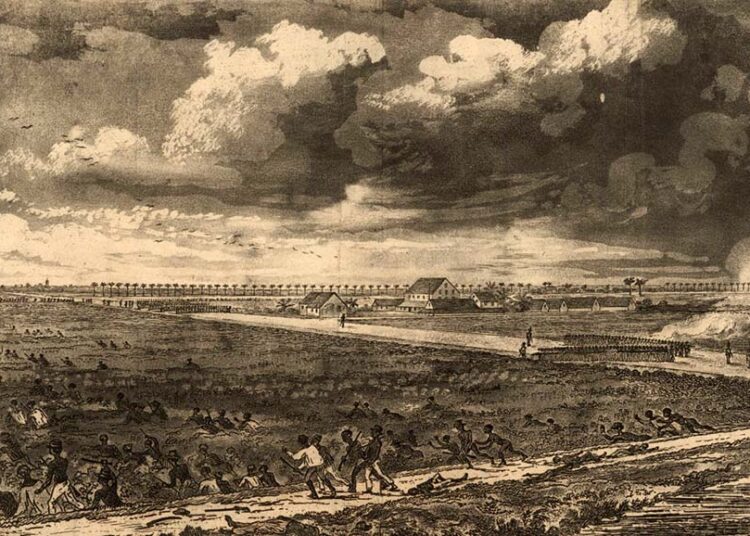
Image credit: Jack Gladstone, imagined by Errol Ross Brewster

Although few of the white planters were harmed, the revolt was met with brutal repression. On 20 August, 200 enslaved Africans were killed by British soldiers under the command of Lt Col John Leahy, a veteran of the Napoleonic wars. He ordered his troops to open fire when 2,000 rebels refused to disperse, an event that turned the tide against the rebels.

Jack’s father, Quamina, was captured, killed and hung in chains outside the plantation. Others were tortured to death and decapitated, their heads speared on to poles as a warning to others. Jack was spared and exiled to St Lucia, but no record of his arriving there has been found.

An English missionary, John Smith, was convicted of assisting the revolt and sentenced to death. He died in prison while awaiting execution.

Westmaas said: “As a Guyanese I am immensely amazed and proud of the actions in the Demerara Rebellion. It’s a huge human drama. To have anything from 9,000 to 13,000 people rise up in plantations, given the conditions, was a tremendous feat of planning and endurance.”

The 1823 rebellion, and a later revolt in Jamaica in 1831, are thought to have persuaded the British government that slavery was no longer practicable. Emancipation followed in 1833. (The Guardian)

William Gladstone: family of former British PM to apologise for links to slavery
ShareTweetSendShareSend

Related Posts

Business

The Hidden Exchange Rate Costing Guyanese Businesses 7% They Can’t See in the Budget

by Staff Writer
September 15, 2026

Georgetown — The Ministry of Finance's Mid-Year Report 2026, tabled by Senior Minister in the Office of the President with...

Read moreDetails
News

Guyana’s 33.3% Growth Meets a Cost-of-Living Crisis

by Admin
September 15, 2026

Guyana’s Government is celebrating a 33.3 per cent expansion of the economy in the first half of 2026, but the...

Read moreDetails
L-R President Irfaan Ali and Leader of the Opposition Azruddin Mohamed
News

WIN Rejects Ali Meeting, Warns Against ‘Normalising’ Attacks on Parliament

by Admin
September 15, 2026

The We Invest in Nationhood (WIN) has rejected an invitation from President Irfaan Ali for members of two parliamentary committees...

Read moreDetails
Next Post

When can the public criticise judges?


EDITOR'S PICK

Guyana gets five additional Land Surveyors

August 11, 2022
GTUC (Guyana Trades Union Congress)

May Day 2026 Observances

April 22, 2026
President of ExxonMobil Guyana Alistair Routledge

‘From Exxon to Guyanese, to Exxon to Govt Only’- Lall

November 24, 2025

WORD OF THE DAY: CONTRAPTION

April 15, 2023

© 2024 Village Voice

No Result
View All Result
  • Home
  • News
  • Sports
  • Editorial
  • Letters
  • Global
  • Columns
    • Eye On Guyana
    • Hindsight
    • Lincoln Lewis Speaks
    • Future Notes
    • Blackout
    • From The Desk of Roysdale Forde SC
    • Diplomatic Speak
    • Mark’s Take
    • In the village
    • Mind Your Business
    • Bad & Bold
    • The Voice of Labour
    • The Herbal Section
    • Politics 101 with Dr. David Hinds
    • Talking Dollars & Making Sense
    • Book Review 
  • Education & Technology
  • E-Paper
  • Contact Us

© 2024 Village Voice