Wednesday the Ministry of Finance announced the withdrawal of US$300 Million from the Natural Resources Fund (NRF). This represents the third transfer for 2024, totalling US$300 million (equivalent to G$62.394 billion) from the NRF on July 22, 2024, to the Consolidated Fund. This transfer brings the accumulated withdrawals to date in 2024 to US$850 million (equivalent to G$176.782 billion) within the total of US$1.586 billion (equivalent to G$329.9 billion) approved to be withdrawn in 2024.
This withdrawal is pursuant to the Natural Resource Fund (NRF) Act 2021, as amended by the Fiscal Enactments (Amendment) Act 2024, and Parliamentary approval granted for US$1,586,150,331 (equivalent to G$329,885,563,088) to be withdrawn from the NRF in 2024. This approval was made by the People’s Progressive Party (PPP/C) majority seat in the National Assembly.
The Government continues to ignore calls by the main parliamentary opposition and sections of civil society to manage the Fund in a inclusionary, equal and equitable manner that would ensure no Guyanese or any section of society is left behind.
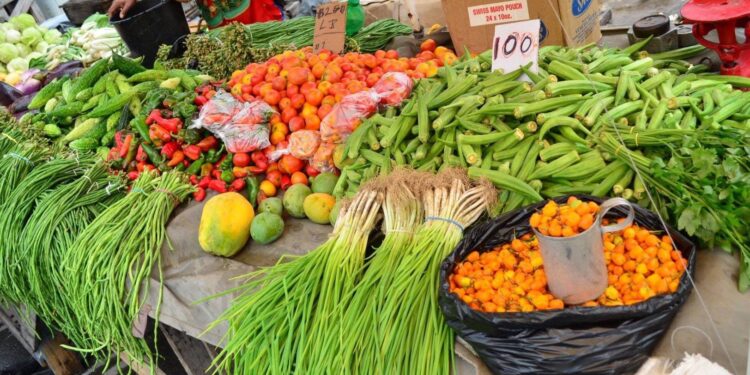
Meanwhile cost of living is soaring, workers continue to be denied a livable wage/salary, and many are forced to make difficult decisions such as foregoing a meal.
GHK Lall, a columnist in this newspaper, in a skating rebuke of government’s priorities in midst of burgeoning wealth and economic hardship of ordinary people, said “what is happening to the poor and working class in Guyana should not happen to a dog. “
Making reference to Stabroek News’ Cost of Living Series, Lall highlights the economic struggle of residents in Wakenaam Island, Essequibo.
“Rice weighing 10kg was $2,000 a few months ago, it is now $2,400 (20%), and depending on the respondent from 16% to as much as 95% (a typo, for sure). One interviewee said that prices vary from shop to shop. Five pounds of sugar was $800, is now $1,000 (25%); and a 15-lb bag of sugar $1,800 a few months ago is now $2,400 (33%). A small pack of Fernleaf milk was $700, now $800 (14%). There is no place to run, nowhere to shelter, for the local fruits of the land: eddo and plantain are also up.”
The columnist bemoans the fact that “in sum, every single item identified by our brothers and sisters in Wakenaam in a basic food basket was not in any single-digit percentage, but double-digits and crushingly so.”
A October 2002 World Bank Fact Sheet stated at least 48 per cent of the Guyanese population live in poverty and on US$5.50 per day. With increasing cost of living the same money would purchase less not more.
Recent claim by Vice President Bharrat Jagdeo the Government is addressing the high cost of living in the form of decreased taxes and subsidies means nothing to ordinary Guyanese who are seeing no alleviation of their economic suffering.
In the midst of growing poverty Government continues to put tens of billions into infrastructure. Some of the works are either incomplete or of poor quality. Unable to ignore public criticisms of the wanton wastage in taxpayers’ money, Public Works Minister Juan Edghill recently announced government was cutting ties with contractors that have not completed their work on time.
Guyana is the world fastest growing economy and richest per capita. In 2024 Guyana’s National Budget is $1.146 trillion, the largest in the nation’s history and larger that all budgets combined since independence (May 26, 1966). This year Guyana is expected to earn no less than US$2.8 billion in oil and gas revenue.