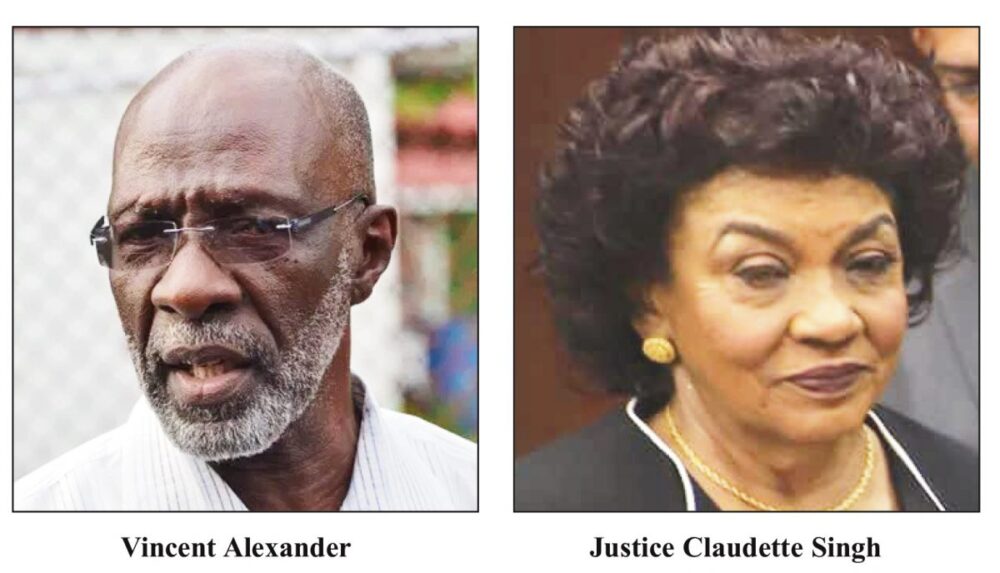
The Guyana Elections Commission (GECOM) is once again embroiled in constitutional and political controversy following the 2025 General and Regional Elections — a historic vote that has upended traditional party alignments and triggered debate over the legitimacy of the Commission’s opposition-nominated members.
At the heart of the issue is a shift in the 65-member National Assembly, where the newly formed We Invest in Nationhood (WIN) party — just four months old — secured the most seats and has positioned its leader, Azruddin Mohamed, as the new Leader of the Opposition. This has displaced the longstanding opposition bloc, A Partnership for National Unity + Alliance For Change (APNU+AFC), in which the People’s National Congress (PNC) remains a dominant force.
Since GECOM’s establishment in 1991, opposition-nominated seats on the Commission have rotated among the People’s Progressive Party (PPP), PNC, and later APNU+AFC. However, the results of the 2025 elections have dramatically altered that equation, raising constitutional questions: Do the current opposition-nominated commissioners — appointed under the previous Opposition Leader — still hold legal legitimacy?
GECOM Chairperson, Retired Justice Claudette Singh, believes they do not.
“We have had new elections and remember there is a new Opposition,” Singh told Kaieteur News. “When Parliament has convened, then the Opposition Leader will have a chance to choose who his commissioners are — that’s all I said and they don’t want to accept that. I am only acting in accordance with the Constitution.”
Citing Article 161(3)(b) of the Constitution, Singh explained that the President must appoint three GECOM members based on the advice of the Leader of the Opposition. With the former Opposition Leader now out of office, she contends that those previous nominees have no continuing authority.
Article 161(3)(b) provides:
“…three members to be appointed by the President acting in accordance with the advice of the Leader of the Opposition after meaningful consultation with the non-governmental political parties represented in the National Assembly.”
In other words, under paragraph (3)(b), three members of the Guyana Elections Commission (GECOM) are to be appointed by the President, acting on the advice of the Leader of the Opposition, following meaningful consultation with the non-government parties represented in the National Assembly.
Under the current GECOM structure, the Chairperson is appointed by the President from a list submitted by the Leader of the Opposition. The current Chair, therefore, is not exempt from the same constitutional provisions governing the appointment and tenure of other commissioners.
Singh also pushed back against claims by APNU+AFC-nominated commissioners that their appointments have no fixed term.
“I don’t know where they got that from because when you read Article 161(3)(b), I don’t believe you get that? … So they need to say where they got that from,” she said, dismissing the idea of lifetime appointments.
Singh also rejected claims made by commissioners nominated by A Partnership for National Unity and the Alliance for Change (APNU+AFC) that their appointments have no fixed term.
“I don’t know where they got that from, because when you read Article 161(3)(b), I don’t believe you get that. So they need to say where they got that from,” she said, dismissing the notion of lifetime appointments.
In a sharp rebuttal, opposition-nominated commissioner Vincent Alexander accused Singh of acting beyond her constitutional remit — and of doing so with personal motives.
“It has long now been rumoured that GECOM’s Chairperson, Justice Retired Claudette Singh, SC, CCH, wishes to see the back of me,” Alexander said in a public letter. “The apparent reason is my exposure of her ineptitude, incompetence and bias in the conduct of the affairs of GECOM.”
He charged that Singh is using the constitutional debate to mask a dereliction of duty — particularly, her failure to declare and present the results of the 2025 elections to the Commission as required by Sections 96 and 99 of Representation of the People Act (ROPA).
“Her contention that the Commission is not properly constituted cannot justify her clear dereliction of duty,” Alexander stated. “In any circumstance, the Commission’s life could not have come to an end before the results were declared.”
Alexander also said Singh acted unilaterally in interpreting the Constitution and failed to inform commissioners of her position.
He questioned the logic of Singh’s constitutional reading, arguing that if opposition-nominated commissioners’ appointments are invalid after a new Opposition Leader is installed, then so too should the Chairperson’s appointment — which is also derived from the same consultative process with the Leader of the Opposition.
“Why has Claudette… remained in office while casting the opposition nominees to the curb?” he asked. “How is 161(2), which governs her own appointment, to be interpreted?”
Alexander likened commissioners to U.S. Supreme Court judges, who are insulated from political transitions.
“They are free to act without having to look over their shoulders. Notably, commissioners are not de jure representatives of their nominators.”
He also cited precedent, noting that he has served under multiple governments for over 18 years, and the issue of reappointment has never before arisen due to a change in parliamentary composition.
Beyond the constitutional battle, Alexander repeated his longstanding call for electoral reform:
“GECOM, in the context of real politics in Guyana, is not fit-for-purpose and should be reconstituted to be patently unbiased, non-partisan and professional. All of the observer missions, over the years, have come to the same conclusion, albeit in different words.”
He ended with a caution to the incoming opposition:
“Hopefully, those who claim to represent change will not simply pursue changing six for a half a dozen — or even worse, a six for a nine.”
With Parliament set to convene and the We Invest in Nationhood party could claim political power to nominate its own commissioners, GECOM’s current configuration may change — but constitutional clarity is still lacking. The dispute between the Chair and the current opposition nominees could require judicial interpretation or legislative intervention. For now, however, the standoff continues — placing GECOM’s operational legitimacy, and the integrity of Guyana’s electoral system, under renewed scrutiny.