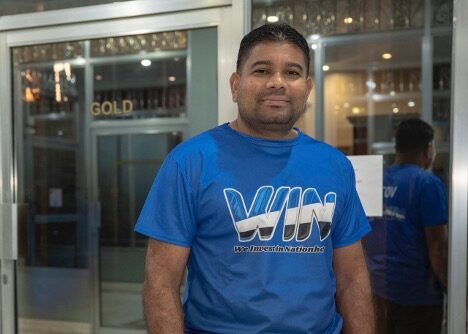
By Mark DaCosta-In a poignant statement that underscores the urgent need for meaningful change, Azruddin Mohamed, the leader of the We Invest in Nationhood (WIN) party, has sharply critiqued the government’s approach to poverty alleviation in Tiger Bay. His recent visit to the community, where he engaged with residents, revealed a stark reality marked by neglect and unfulfilled promises spanning decades.
During his visit in July 2025, Mohamed listened intently as the long-suffering residents shared their grievances about the deteriorating conditions in which they have lived for generations. Many had seen little to no improvement in their lives despite the government’s assurances of support and development.
“They need real investment,” Mohamed stated, emphasising that superficial gestures, like food distribution intended for a photo opportunity, do nothing to alleviate systemic issues. The people of Tiger Bay, located just a stone’s throw away from the opulent State House, continue to battle the daily struggles of inadequate housing, lack of infrastructure, and diminished job opportunities.
Decades of governance by the People’s Progressive Party/Civic (PPP/C) have left these communities disillusioned. Since 1992, the PPP/C has held power for over three decades, and yet, the impoverished conditions of Tiger Bay starkly illustrate broken promises and the widening gap between the elite and the everyday citizen. While policymakers enjoy the comforts of their offices, residents of this historically beleaguered area continue to experience a harsh reality that speaks to an alarming disregard for their wellbeing.
The visible disparity is jarring. Those living in Tiger Bay, many of whom have called it home for 40 to 50 years, still endure harsh conditions, with inadequate access to essential services. The fact that these citizens face barriers to opportunities simply because of their geographic and socioeconomic position is a betrayal of the nation’s fundamental values. In a country rich with resources and potential, the persistent neglect suffered by Tiger Bay’s residents raises significant questions about governmental priorities and accountability.
Assertions that residents are apathetic towards improving their living standards are fundamentally misguided. The community’s reality is one of entrapment in generational poverty, with opportunities overwhelmingly skewed in favour of select groups. The local voices echo a desperate plea for dignity and respect, a longing that should resonate throughout the heart of governance. “They spoke honestly about their living conditions,” Mohamed noted, reflecting the profound frustration expressed by many who are afforded neither fair treatment nor basic necessities.
The Qur’an reminds followers to “do good… to the needy,” yet a simple walk through the impoverished streets of Tiger Bay reveals an alarming disconnect between religious precepts and the actions of those in power. This ongoing neglect begs the question: when will the government take the necessary steps to provide sustainable solutions for these communities? The time has come for a decisive shift away from token gestures towards long-term strategies — such as house lot allocations, infrastructure development, and genuine employment opportunities.
According to Mohamed, instead of continuing a cycle of temporary fixes, the government must embrace a transformative approach that respects the dignity of all citizens. Azruddin Mohamed’s commitment to not merely stay in his lane but challenge the status quo serves as a rallying cry for those who believe in true equity and justice. It is high time the government listens to these pleas with sincerity, courage, and compassion — ensuring that the residents of Tiger Bay receive not only a voice but concrete outcomes reflective of their rightful place in our nation. The weary population, waiting for change, deserves nothing less, Mohamed insists.