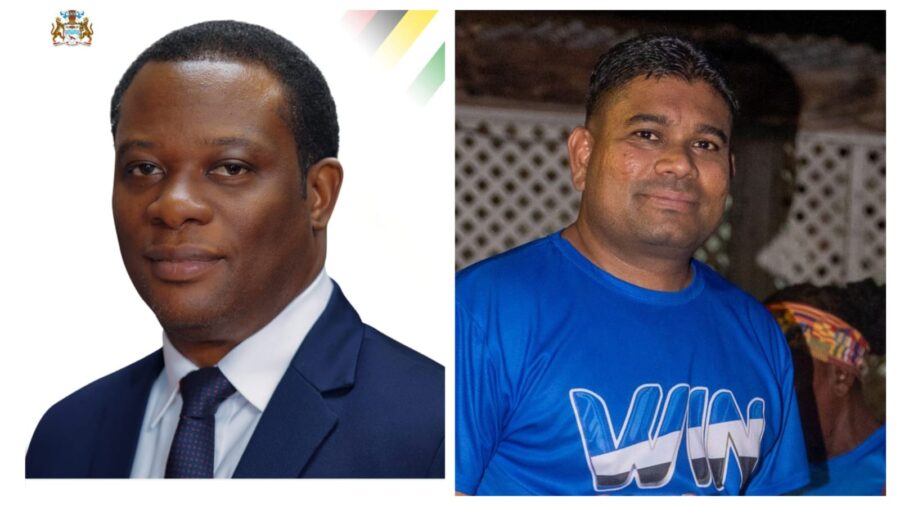
Venezuelan Ambassador to Guyana, Carlos Amador Pérez Silva, has categorically denied that We Invest in Nationhood (WIN) leader Azruddin Mohamed ever visited the Venezuelan Embassy in Georgetown. “He never has been, never,” the ambassador stated unequivocally, adding that neither Mohamed nor his father Nazar “Shell” Mohamed had been to the embassy.
Pérez Silva also emphasised the diplomatic mission’s commitment to confidentiality in handling consular affairs. “This is confidential for the embassy,” he said. “We have to respect the privacy of the people that come here. If someone visits to request a visa, for example, that’s private information. It’s not for the embassy to disclose.”
Last month, speaking on the sidelines of the swearing-in ceremony of Prime Minister Brigadier (Ret’d) Mark Phillips and Vice President Bharrat Jagdeo, Ambassador Pérez Silva also firmly rejected allegations that either Mohamed had engaged in political coordination or received preferential treatment from Venezuela. “No. Why do you say that? No,” he said in response to questions about supposed links between Mohamed and the Maduro regime.
Mohamed, in a separate statement to Stabroek News, confirmed he had never visited the Venezuelan embassy and echoed the ambassador’s denial. He accused President Irfaan Ali and Vice President Bharrat Jagdeo of intentionally deceiving the public during the ongoing election campaign. According to Mohamed, the claims made against him were fabricated for political purposes. “What they are saying is not just false—it’s a deliberate attempt to mislead the public,” he asserted.
He also firmly rejected any suggestion of ties to Venezuelan President Nicolás Maduro, stating he has never met, spoken to, or had any connection with the Venezuelan leader. “This narrative is being weaponised to scare voters and paint me as a traitor,” Mohamed said. “It is nothing short of political desperation.”
In August, Foreign Affairs Minister Hugh Todd claimed during a Department of Public Information (DPI) programme that the Venezuelan ambassador had “confirmed” the Mohameds were “frequently visiting the Venezuelan embassy” to obtain visas to travel to Caracas. Todd further suggested that these alleged visits were connected to concerns raised by U.S. congressmen regarding gold smuggling and money laundering—issues he warned posed a “serious threat” to Guyana’s sovereignty and relationship with the United States.
However, the ambassador’s flat denial not only contradicts Todd’s statement but also exposes a disturbing reality: the government appears prepared to accuse a citizen of espionage and suggest collusion with a foreign power currently making a false and aggressive claim to two-thirds of Guyana’s territory. Such conduct suggests not only profound political desperation but raises chilling concerns about the lengths to which the Irfaan Ali administration might go to secure its political position.
That a sitting government would publicly imply one of its own citizens is colluding with a hostile state—without evidence, and now contradicted by the very diplomatic source they cited—amounts to an abuse of power and a betrayal of public trust. It calls into question whether the Ali administration can be relied upon to uphold truth, fairness, and national unity over partisan interests.
This revelation does not merely challenge the credibility of the government’s narrative—it invites a broader reckoning with the integrity of those in power, and whether they are willing to sacrifice a citizen’s reputation and national cohesion for political gain.
An update to this story can be read here
Diplomatic Dispute Exposes Government’s Misleading Narrative