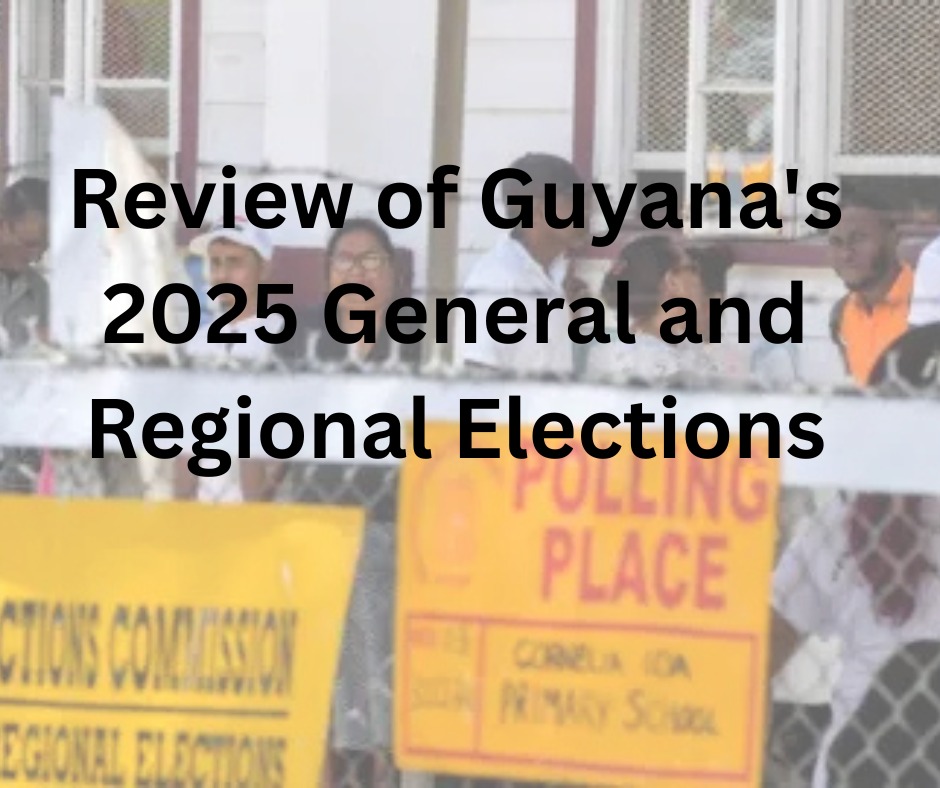
As Guyana concludes its 2025 General and Regional Elections—held on September 1, with members of the Disciplined Services voting early on August 22—serious concerns remain over the integrity of the electoral process. Mounting public anxiety has been fuelled by issues surrounding the politicisation of the Guyana Elections Commission (GECOM), the continued use of a bloated voters’ list, the absence of biometric verification, and the failure to implement key recommendations from previous international observer missions.
Against this backdrop, Village Voice News will conduct a comprehensive review of the electoral process—from voter registration to the declaration of results. Let the chips fall where they may. The Guyanese people deserve the truth, and this publication intends to pursue it with clarity, independence, and unwavering commitment to transparency and democratic accountability.
Voter Registration and the Bloated List
One of the most significant vulnerabilities in Guyana’s electoral infrastructure is the persistently bloated Official List of Electors (OLE). Despite repeated calls by stakeholders—including international observer missions—for its sanitisation, the list remains swollen with names of deceased individual, emigrants, non-domiciled Commonwealth citizens, among others who ought not to be on the list. This not only undermines public confidence but opens the door to potential electoral abuse.
In many democracies, voter rolls are routinely updated through transparent and verifiable processes. However, in Guyana, the refusal to adopt biometrics at the point of voting and resistance to house-to-house verification further erode trust. According to global election integrity standards, outdated lists can lead to confusion, wrongful removals, or fraudulent use of ballots—issues that cast a long shadow over electoral legitimacy.
The Politicisation of GECOM
GECOM, constitutionally mandated to function independently, continues to face criticism for being politically compromised. Both the composition of its leadership and its operational conduct have, at various points, appeared tilted in favour of the governing People’s Progressive Party (PPP) administration. When electoral bodies lack impartiality—or are perceived to—confidence in the fairness of the process is jeopardised.
The appointment of key officials through backroom political deals, coupled with the voting record of GECOM Chair Ret’d Justice Claudette Singh—who has consistently sided with PPP-nominated Commissioners—has fueled deadlock and deepened public mistrust. Electoral experts stress that institutional neutrality is the bedrock of credible elections, and the lack of demonstrable independence raises serious concerns about whether decisions are being guided by democratic principles or partisan interests.
Failure to Implement Observer Recommendations
In 2020, international observer missions, including those from CARICOM, the European Union, Organisation of American States (OAS) and the Carter Center, issued detailed recommendations aimed at improving electoral transparency and integrity in Guyana. These included introducing biometrics, modernising tabulation systems, enhancing transparency in results reporting, campaign finance reform, and depoliticising GECOM. To date, few, if any of these recommendations have been meaningfully implemented.
This failure suggests a lack of political will to reform a system that benefits from its own weaknesses. It also raises red flags for the 2025 elections. Observer guidelines from the Organisation for Security and Co-operation in Europe (OSCE)and the Carter Center repeatedly emphasise that post-election reforms are crucial to ensuring future integrity—not optional.
The Dangers of Opacity in the Electoral Process
Elections are not simply about casting and counting ballots—they are about public confidence in the process. Guyana faces risks at every stage of the election lifecycle:
- Registration: Suspect data integrity and absence of biometric identification.
- Campaign Environment: Disinformation, unequal media access, and intimidation.
- Voting Day Operations: Inadequate chain-of-custody for ballots and equipment, lack of transparency in handling.
- Tabulation & Certification: Consistent with the Representation of the Peoples Act, unexplained shifts in results, political pressure during certification.
Each of these vulnerabilities represents not only a technical risk but also a threat to the legitimacy of the outcome. As noted in international literature on electoral integrity, perception often carries as much weight as proof. A system seen as unfair, even if procedurally sound, is a system in crisis.
Given Guyana’s proportional representation system, every single vote holds immense weight — it can determine not only who becomes President, but also the composition of the National Assembly and Regional Democratic Councils. This makes the credibility of the vote count absolutely critical to ensuring legitimate governance and public trust in the democratic process.
The Role of Public Scrutiny and Media Accountability
Democracy thrives under scrutiny. Without critical examination of electoral processes, manipulation and maladministration can persist unchallenged. In this light, Village Voice News affirms its commitment to journalistic responsibility by undertaking a full-scale, evidence-based review of the 2025 elections.
We will apply the global standards outlined by electoral experts and observer bodies, evaluate how GECOM meets or falls short of these benchmarks, and monitor all indicators of procedural integrity or failure. This is not about partisanship—it is about principle. If the system stands up to scrutiny, so be it. If it doesn’t, then the public deserves to know.
Conclusion: A Democracy Worth Defending
Guyana’s democracy is still maturing. The wounds of past electoral crises remain fresh. In 2025, the nation must rise above its historical divisions and face the hard truth: without reforms, transparency, and accountability, elections will remain flashpoints rather than milestones.
Free, fair, and credible elections are not a luxury—they are a democratic necessity. The stakes are high. And Village Voice News will remain steadfast in its mission to shine a light on the process—no matter where that light may lead.