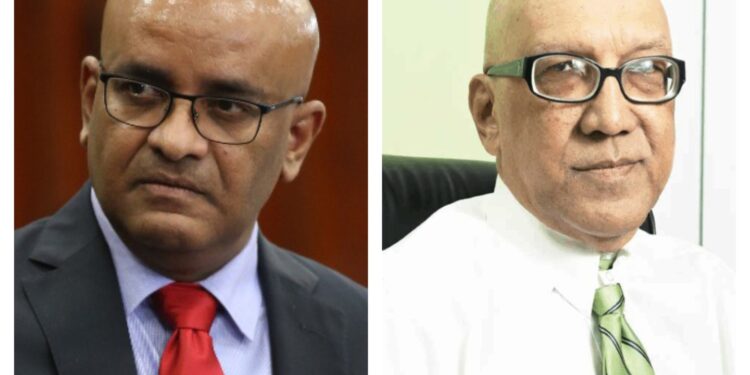
Vice President Bharrat Jagdeo’s recent proposal to address the ongoing teachers’ strike in Guyana by introducing e-schooling and a private voucher system further reveals the PPP’s contempt for education of the nation’s children. The citizens of Guyana should be reminded that it is under the PPP government that more than half of the nation’s children drop out of school between the 7th and 11th grades and those who do remain, overwhelmingly underperform on their assessments and CXC exams. While the PPP administration presents private school vouchers and elearning as a solution, it is essential to scrutinize the implications and underlying motives of this plan by an administration which has failed the children of Guyana for decades.
The PPP has a long history of centralizing power, and their current stance on the privatization of education reveals a flaw in logic but then again, the goal of the announcement is to scare teachers not to following any particular form of logic. There is simply no way that an administration which has relied on the under-education of especially their supporters, will simply cede the power of the ministry of education to the private school system . Simply put, the PPP are unlikely to genuinely devolve power by empowering parents and students with vouchers. The tremendous influence they wield over the 179,000 students in public schools is a significant aspect of their control, one they are not inclined to relinquish.
It is important to note however, that even if the government moves forward with expanding the private school system through vouchers, the demand for teachers would inevitably increase. This surge in demand would likely drive up salaries, which contradicts the government’s apparent reluctance to meet teachers’ current wage demands. The fundamental issue of underpaying educators would not be resolved but merely shifted to another sector, a sector which would be more likely to accede to the demands for higher wages, considering their massive expansion under such a policy.
The proposal for e-schools introduces additional concerns. While e-schooling might provide a temporary solution, it overlooks the critical aspects of social-emotional learning and group-based interactions that are integral to a child’s development. Schools are not merely centers for academic instruction; they are environments where children learn to socialize, collaborate, and develop essential life skills.
If children are predominantly homeschooled through e-schools, they will miss out on these vital experiences. The importance of face-to-face interaction, building friendships, and participating in group activities cannot be overstated. These elements are crucial for fostering well-rounded individuals who can thrive in diverse social settings.
Moreover, the implementation of a robust e-school model requires substantial resources, infrastructure, and training for both students and teachers. The assumption that e-schooling can seamlessly replace physical schooling without compromising the quality of education is overly optimistic. It is also worth questioning whether the government has thoroughly considered the long-term consequences of such a shift.
In essence, Jagdeo’s plan appears to be a short-term fix that fails to address the root causes of the teachers’ strike and the broader issues within the educational system. The focus should be on resolving the legitimate concerns of teachers and ensuring that the public school system is adequately funded and supported. Unfortunately, Guyana’s leaders do not possess a sufficient appreciation for the value of education or care enough about the consequences of not resolving the teachers’ salary issues to engage in meaningful collective bargaining with Guyana’s teachers.
The future of Guyana’s children should not be jeopardized by ill-conceived, hastily implemented solutions that overlook the importance of comprehensive, quality education for all children of Guyana. It is critical for the government to engage in meaningful dialogue with educators and invest in sustainable improvements to the public education system, rather than resorting to threats and measures that may ultimately do more harm than good.